Slovenia - pretty mountain nation
Slovenia, a compact European gem nestled between the Alps, the Adriatic Sea, and the Pannonian Plain, offers a diverse mix of stunning landscapes, vibrant cities, and rich cultural heritage. Bordering Italy, Austria, Hungary, and Croatia, it's known for its emerald rivers, alpine peaks, medieval towns, and UNESCO-listed sites. With a population of about 2 million, Slovenia is eco-friendly, safe, and affordable, making it ideal for nature lovers, adventure seekers, and cultural explorers. Its capital, Ljubljana, blends historic charm with modern vibrancy, while highlights like Lake Bled and the Soča Valley showcase its natural beauty. As of 2025, tourism continues to grow, emphasizing sustainable practices. The country is obsessed with sports, exercising in the great outdoors is very much a national hobby. And who doesn’t know world’s greatest cyclist Tadej Pogacar? He learned the ropes in his mountainous home country. Soccer and ski jumping are also popular. For visitors hiking is lovely and there’s so many trails in the forests or higher up in the Julian Alps.
Best Time to Visit
Slovenia is a year-round destination, but the ideal time depends on your interests. Spring (April-June) brings mild weather (15-25°C/59-77°F), blooming landscapes, and fewer crowds, perfect for hiking and cycling. Summer (July-August) is peak season with warm temperatures (20-30°C/68-86°F) for lake swims and festivals, though popular spots like Lake Bled get crowded. Autumn (September-November) offers colorful foliage, harvest festivals, and comfortable weather (10-20°C/50-68°F) for wine tasting in regions like Vipava Valley. Winter (December-March) suits skiing in Kranjska Gora or Vogel, with snowy Alps and festive Christmas markets in towns like Ljubljana, though temperatures can drop to 0-10°C (32-50°F). Avoid peak summer if you dislike crowds; shoulder seasons provide better value.
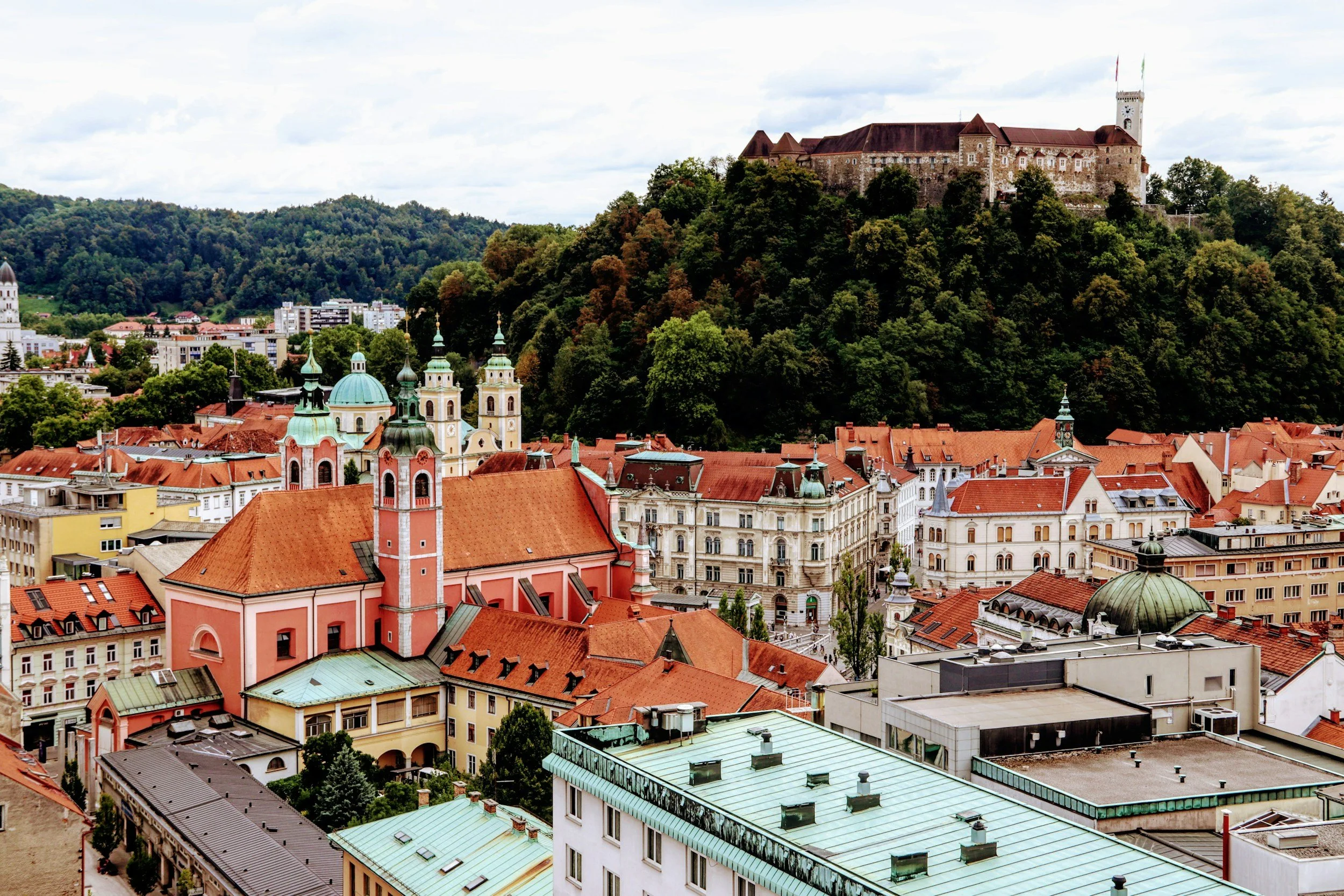
the lovely capital of Ljubljana
Visa Requirements
Slovenia is part of the Schengen Area, so visa rules align with EU standards. Citizens of the US, Canada, Australia, New Zealand, and many other countries can enter visa-free for tourism or business stays up to 90 days within a 180-day period, provided they have a passport valid for at least three months beyond their planned departure. The European Travel Information and Authorization System (ETIAS) is expected to launch in late 2026, requiring pre-approval for visa-exempt travelers. Always check your nationality's requirements on official sites like the Slovenian Ministry of Foreign Affairs. Travel insurance covering health is recommended, as it's required for some entries.
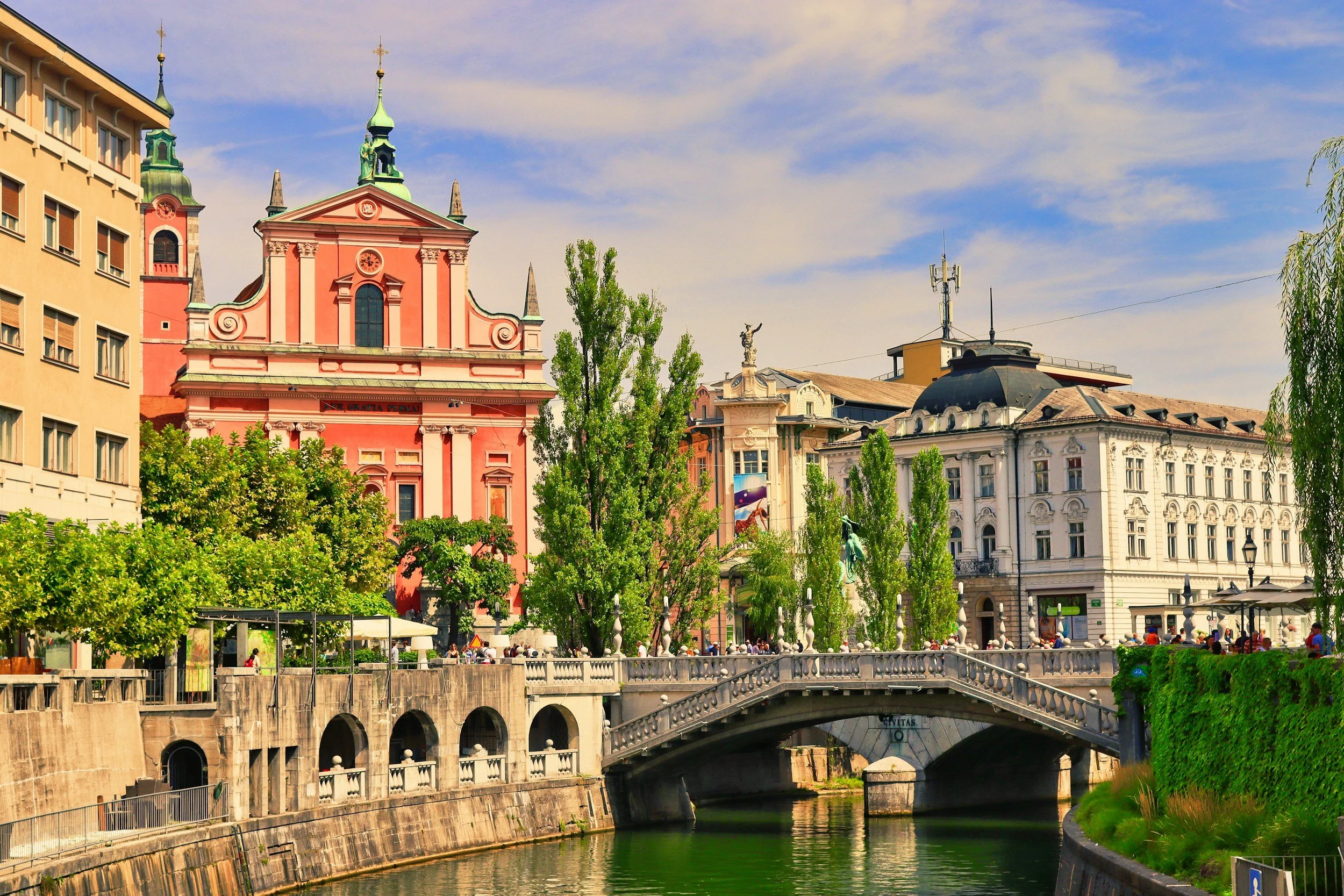
the city feels very much from the old days of the Austro-hungarian empire
How to Get There
Slovenia is well accessible via air, rail, bus, or car, thanks to its central European location.
- By Plane: The main international airport is Ljubljana Jože Pučnik Airport (LJU), about 25 km north of the capital, with direct flights from major European hubs like London (2 hours), Frankfurt, Paris, and Zurich. Budget airlines like Ryanair and EasyJet offer affordable routes but it’s a small airport with not that many direct flights. For transatlantic travelers, connect via larger airports. Nearby alternatives include Venice (Italy, 2-3 hours by bus/train), Zagreb (Croatia, 2 hours by bus), or Trieste (Italy, 1 hour by bus), with transfers to Slovenia. From LJU, shuttles, buses, or taxis reach Ljubljana in 30-45 minutes for €5-20.
- By Train: Efficient for arrivals from neighboring countries. Direct trains from Vienna (Austria, 6 hours), Munich (Germany, 6-7 hours), or Zagreb (Croatia, 2-3 hours) arrive at Ljubljana's central station. Eurail passes are valid on Slovenian Railways (SŽ).
- By Bus: Affordable international options like FlixBus connect from cities like Zagreb (2.5 hours), Venice (3 hours), Budapest (6 hours), or Munich (7 hours) to Ljubljana or coastal towns. Most routes terminate in Ljubljana for easy onward travel. Check with Flixbus for fares.
- By Car: Drive from Austria via the Karawanks Tunnel, Italy via highways, or Croatia. Roads are well-maintained; purchase a vignette (toll sticker) for highways (€15 for 7 days). International driving permit recommended if your license isn't in English.
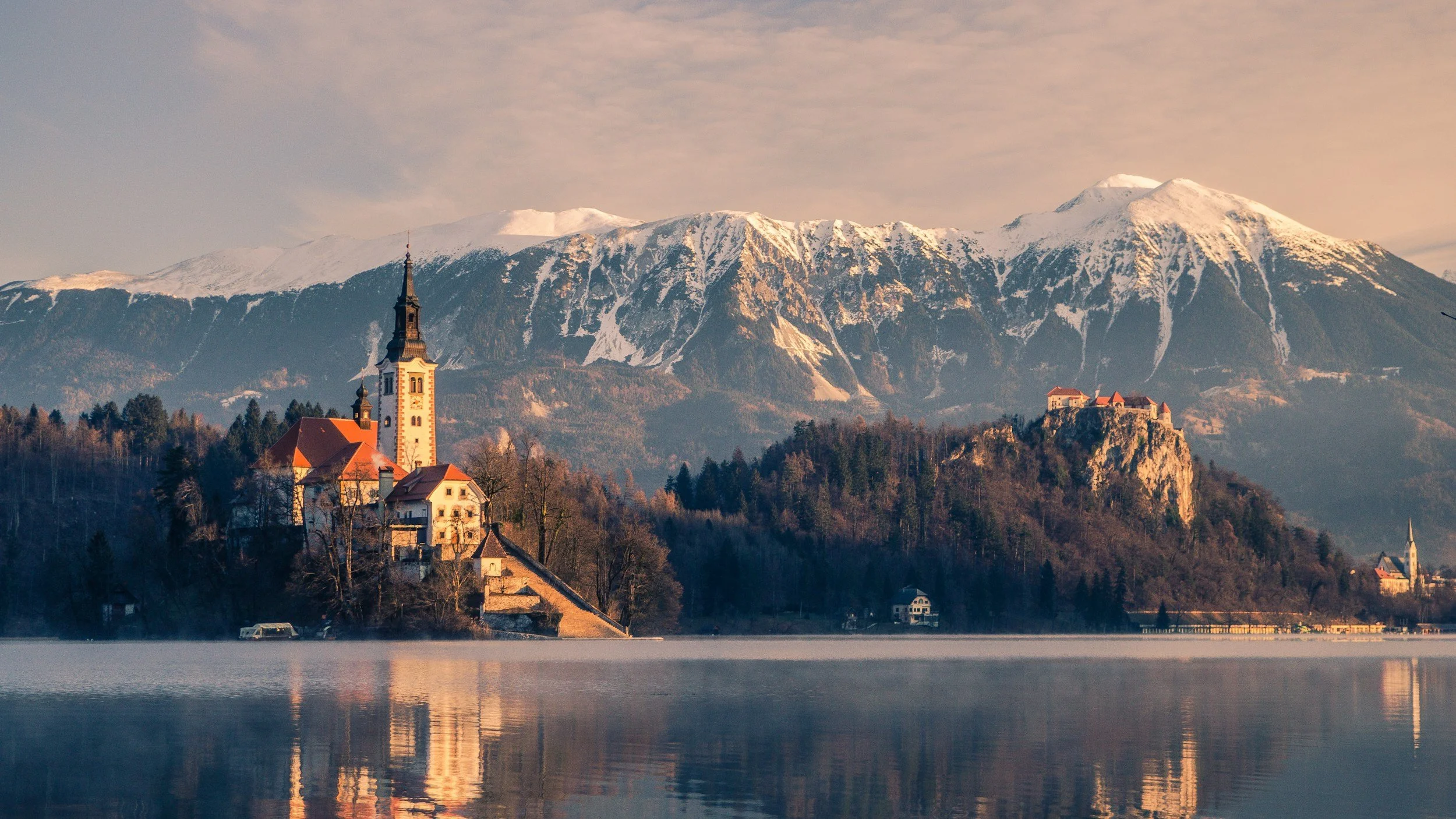
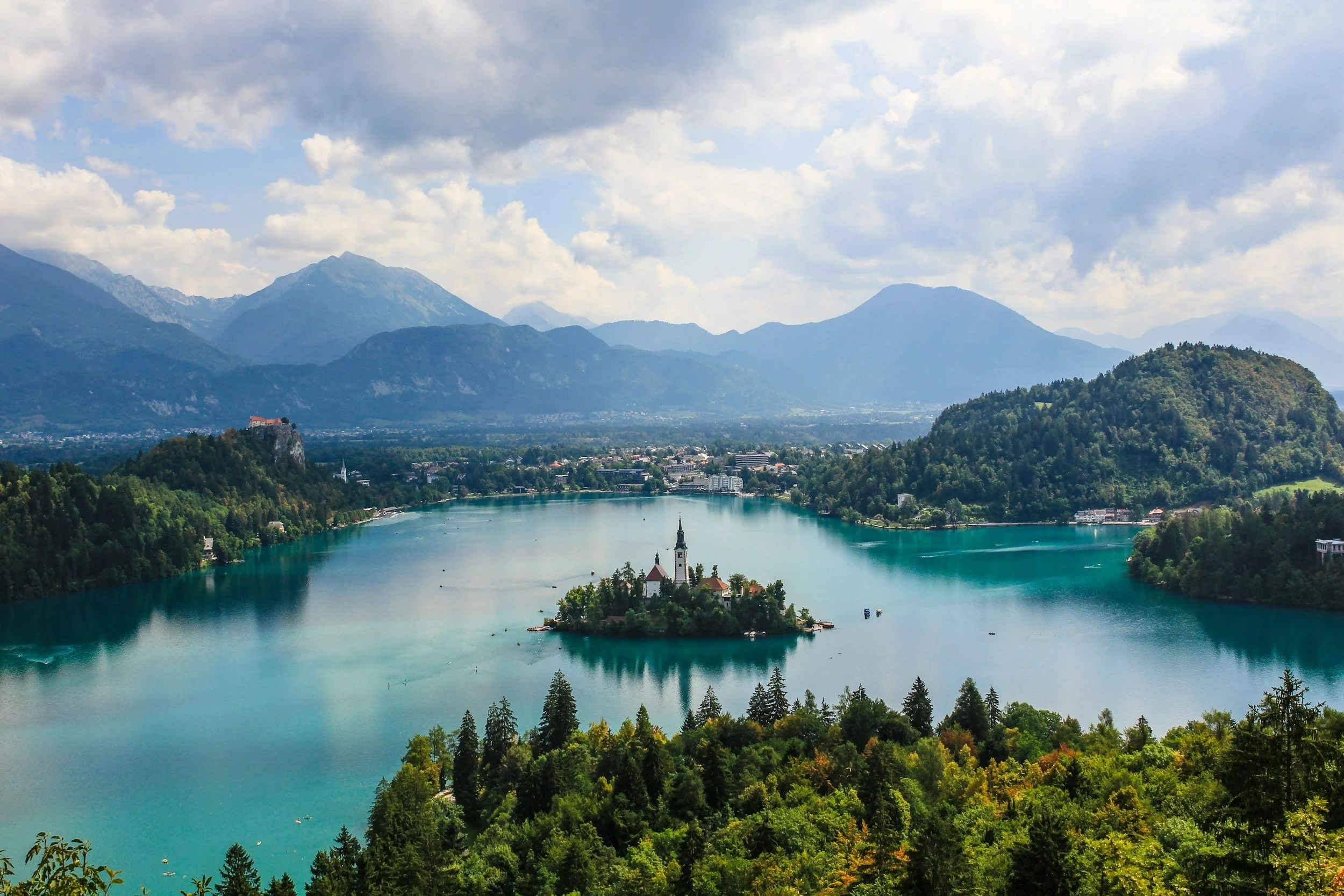
lake Bled with the Alps in the background
How to Get Around
Slovenia's relatively small size makes navigation easy, with options for all budgets.
- Public Transport: Reliable and eco-friendly. Trains (SŽ) connect major cities like Ljubljana to Maribor (2 hours) or Koper (2.5 hours) for €10-20. Buses (Arriva or Nomago) cover rural areas, including routes to Lake Bled (1 hour from Ljubljana, €7). In cities, Ljubljana's Kavalir electric shuttles and bike-sharing are free or cheap. Buy an Urbana card for seamless urban travel.
- Car Rental: Ideal for flexibility in the countryside. Rent from agencies like Sixt or Hertz at airports/cities (from €30/day, including insurance). Automatic cars are pricier; drive on the right, and note speed limits (50 km/h in towns, 130 km/h on highways). Parking is ample but paid in centers.
- Biking and Walking: Slovenia is cyclist-friendly with dedicated paths; rent bikes in Ljubljana (€5/day) or join tours. Hiking trails abound in national parks.
- Other Options: Taxis/Uber are available in cities (€1-2/km); shared shuttles like GoOpti for airport transfers or inter-city (reliable and affordable). For coasts, ferries link to nearby Italian towns seasonally.
Public transport suffices for cities and main sites, but a car unlocks hidden gems like remote valleys.
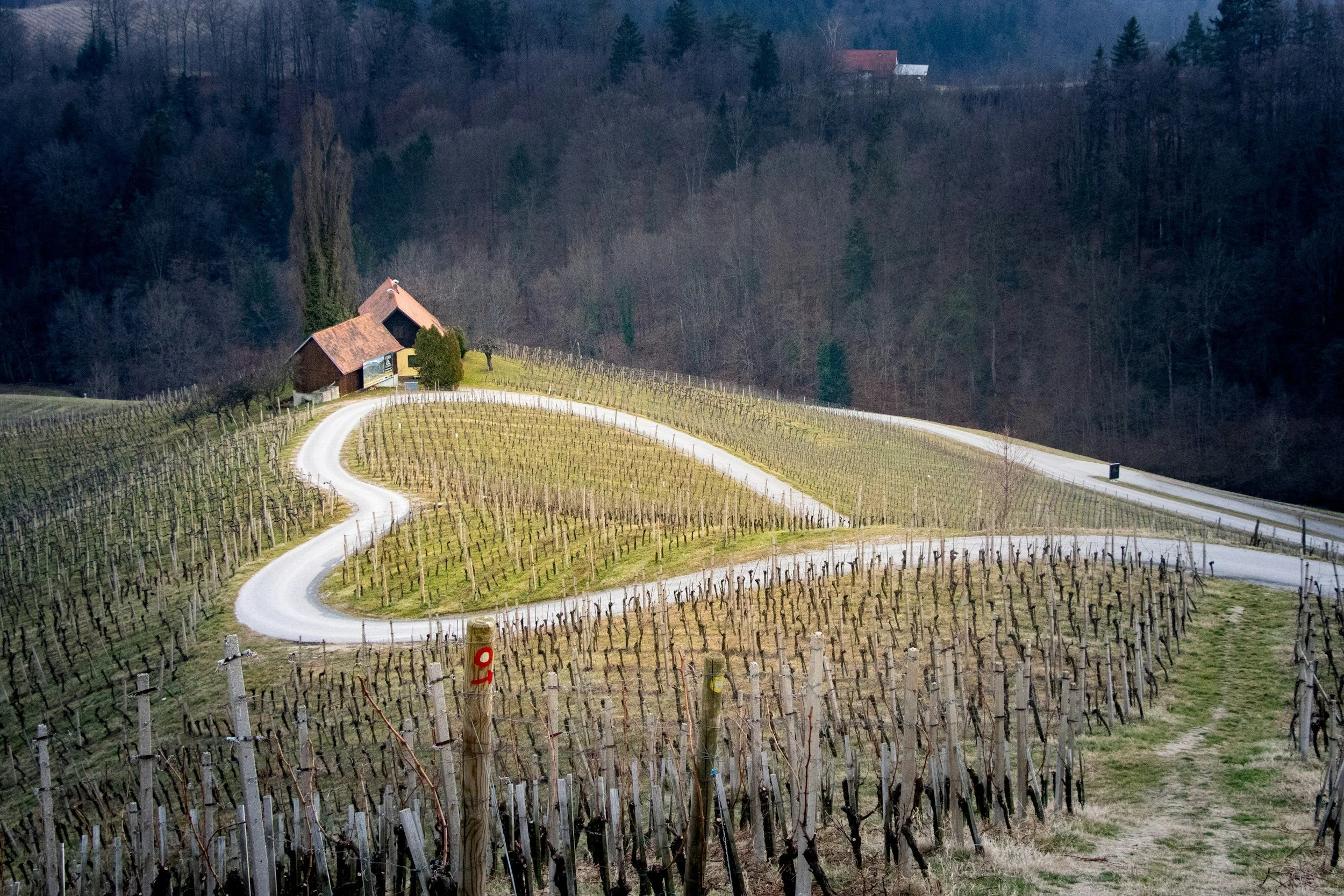
the local wines are renowned
Top Destinations and Attractions
Slovenia packs variety into its borders. Here's a regional breakdown:
- Ljubljana: The lively capital features baroque architecture, riverside cafes, and Ljubljana Castle for panoramic views. Stroll the car-free old town, visit Tivoli Park, or cruise the Ljubljanica River. Don't miss the Central Market for local produce. Many restaurants can feel a little like tourists traps but the local wines are a must try. Just outside of town there’s also very decent hiking in the forests and hills around the city. Check with Komoot and Alltrails for hiking trails.
- Lake Bled: Iconic alpine lake with a church-topped island and clifftop castle. Row a pletna boat, hike viewpoints like Ojstrica, or try kremna rezina cake. Nearby Vintgar Gorge offers boardwalk trails.
- Soča Valley: Emerald river paradise for rafting, kayaking, and hiking in Triglav National Park. Visit Bovec for adventures or Kobarid's WWI museum. Stunning in all seasons.
- Postojna Cave and Predjama Castle: Explore the world's largest show cave by train, home to olm salamanders, then visit the dramatic cave-embedded castle.
- Coastal Slovenia (Piran, Koper and Portorož): Venetian-influenced Piran boasts narrow streets, salt pans, and fresh seafood. Relax on beaches or explore nearby Sečovlje Salina Nature Park.
- Other Gems: Lake Bohinj for tranquility, Velika Planina's shepherd huts, Logar Valley's waterfalls, and Škocjan Caves (UNESCO). Triglav National Park for mountaineering. For Slovenians, hiking Triglav is almost a sacred destination and it’s said everyone has to at least done it once in their lifetime.
Region Key Attractions Best Activities
Alpine Lake Bled, Soča Valley, Triglav NP Hiking, rafting, skiing
Central Castle, old town, markets Walking tours, river cruises
Coastal Piran, salt pans Beach , seafood dining
Karst Postojna Cave, Predjama Castle Cave exploration, history
Accommodation
Options range from budget hostels (€20-40/night) to luxury resorts (€150+). In Ljubljana, stay in boutique hotels like Hotel Cubo. Lakeside glamping at Bled or Bohinj costs €80-120. Coastal apartments in Piran offer sea views for €70-100. Eco-friendly farm stays (agriturismo) provide authentic experiences for €50-80.
Food and Drink
Slovenian cuisine fuses Alpine, Mediterranean, and Balkan flavors. Must-tries: Potica (nut roll), štruklji (dumplings), kranjska klobasa (sausage), and bograc stew. Seafood shines on the coast; pair with wines from 3 regions (Primorska for reds, Podravje for whites). Craft beers and schnapps are popular. Meals cost €10-15 for budget, €20-30 for mid-range. Vegetarian options are increasing; try markets for fresh produce.
Practical Tips
- Currency and Costs: Euro; daily budget €50-100/person (excluding accommodation). ATMs widespread; cards accepted mostly.
- Language: Slovenian, but English is common. Learn basics like "hvala" (thanks).
- Safety: Very safe; petty theft rare. Follow trail safety in mountains.
- Sustainability: Use reusable items; support green-certified spots.
- Connectivity: Free Wi-Fi in cafes/hotels; EU roaming applies.
- Health: Tap water safe; no special vaccines needed beyond routine.
- Shopping: Buy souvenirs like lace, honey, or wine; tourist cards (e.g., Ljubljana Card) save on attractions