Travel Guide to Marrakesh & the Atlas Mountains
Marrakesh, the “Red City,” is Morocco’s most atmospheric destination—a vibrant blend of ancient medinas, fragrant souks, ornate palaces, and the snow-dusted Atlas Mountains rising just beyond the city’s edge. It combines deep tradition with modern comforts: luxury riads, cutting-edge restaurants, desert escapes, and adventure sports only an hour away. It is often said life plays out on the rooftops in this city. Nearly every riad (traditional house) has one and they all seem connected. Some of the rooftop restaurants at dusk are fantastic and during the day (most days are sunny) one has a clear view of the Atlas mountain range not further than 50 km away. In general good food tours, and guided excursions are bookable on GetyourGuide , Viator, Klook or Guruwalk
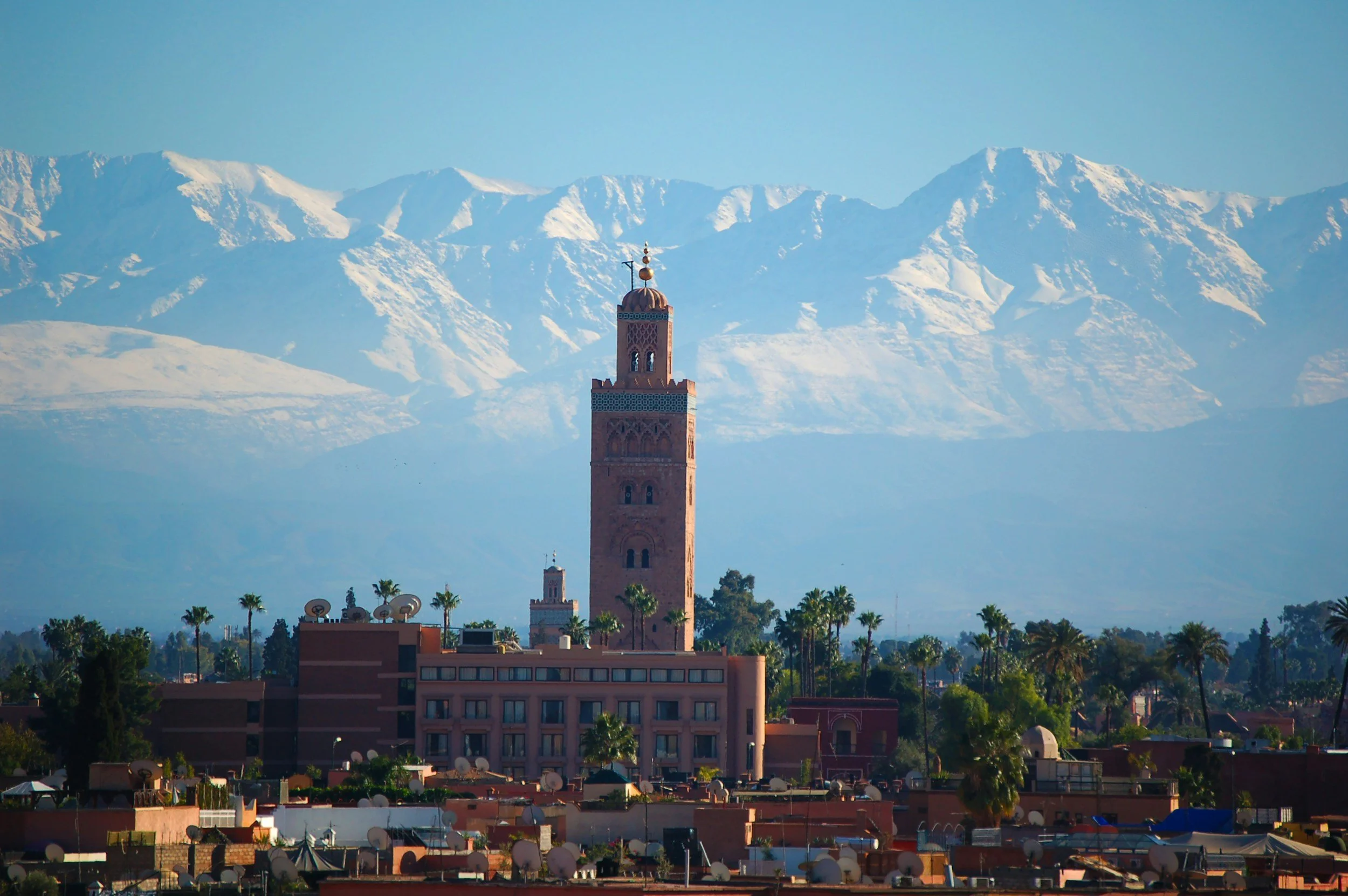
Marrakesh, what else can you say about this view?
Getting There
By Air
Marrakesh Menara Airport (RAK) is the city’s international gateway. It serves direct flights from:
Many major European cities (Paris, London, Madrid, Amsterdam, Frankfurt, Rome, etc.)
Middle Eastern hubs (Doha, Dubai)
Domestic routes from Casablanca, Rabat, Fez, and Agadir
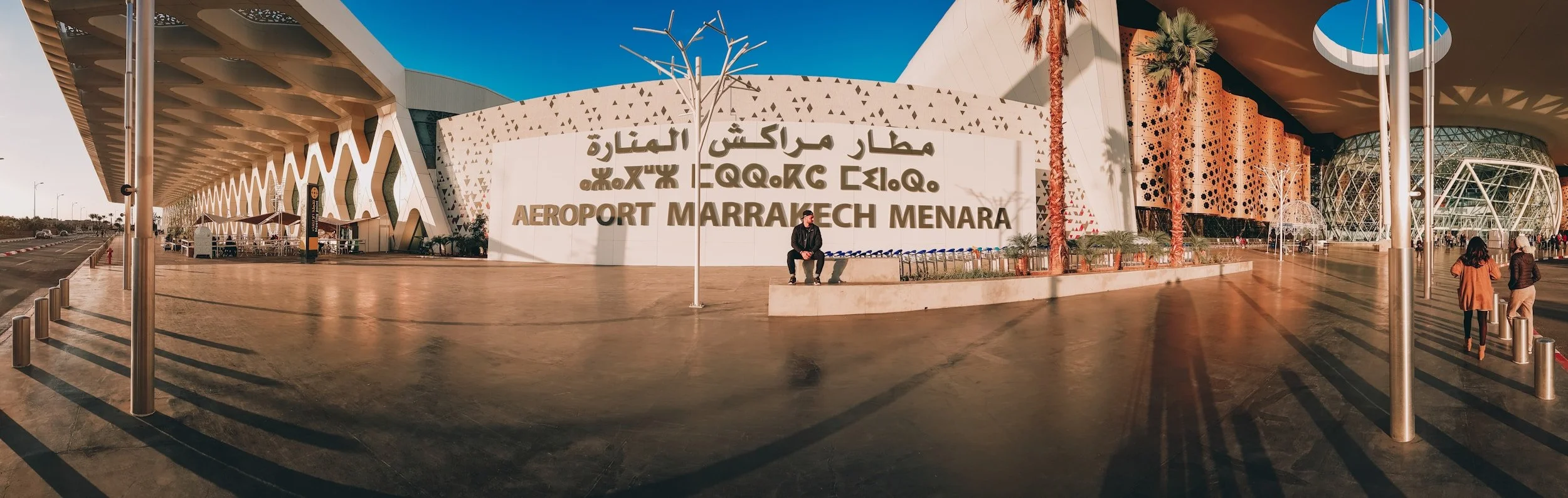
allow enough time to get through the airport when boarding flights
The airport is just 15–20 minutes from the medina and 20–30 minutes from the Palmeraie and newer districts like Gueliz and Hivernage.
Airport to City Transport:
Taxi: Readily available; fares are usually fixed or negotiated before departure.
Ride-hailing apps: Operate in Marrakesh’s newer areas (e.g., Gueliz), although pickup directly from the airport may not always be allowed.
Bus: The L19 shuttle connects the airport with key locations including Gueliz and Jamaa el-Fna.
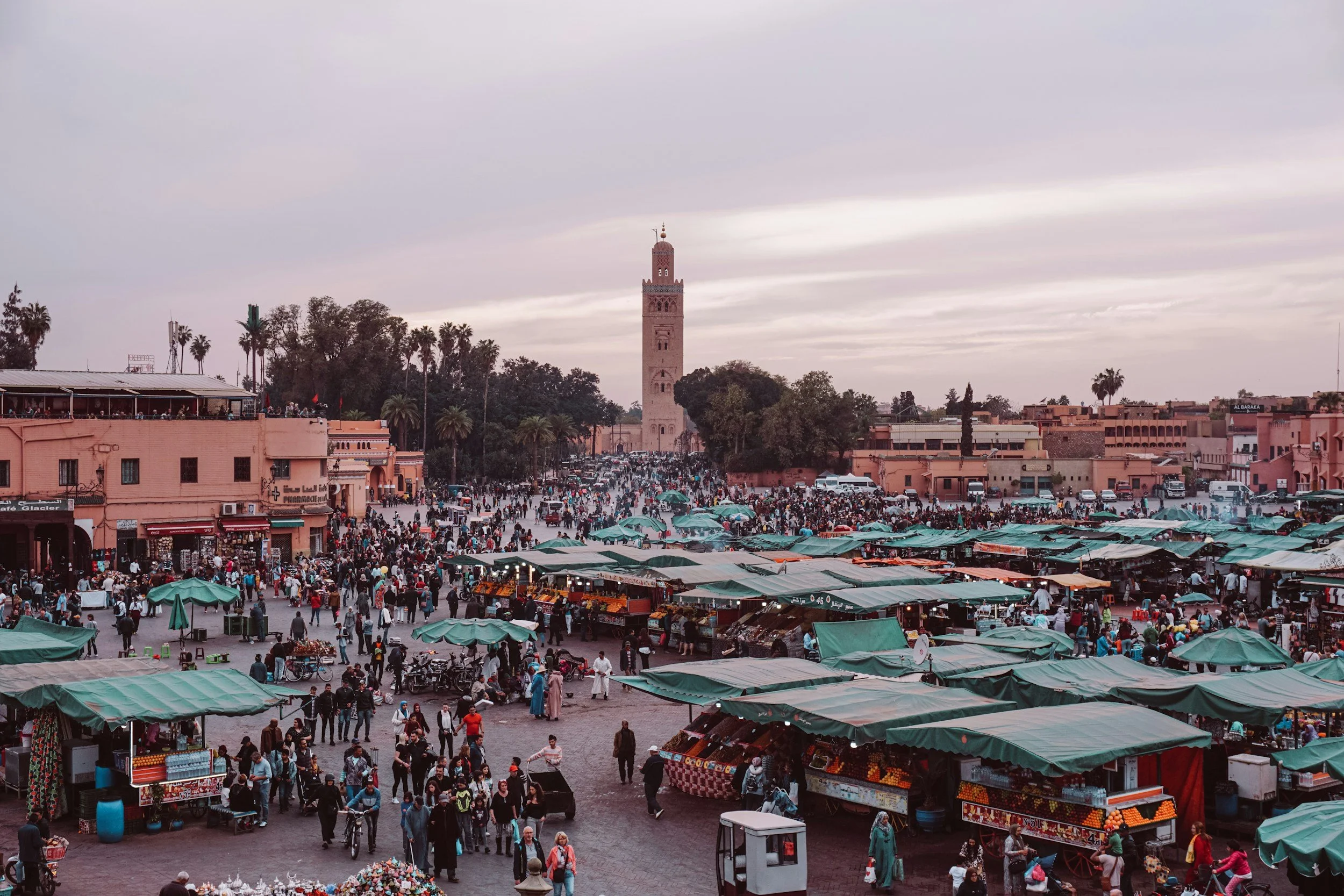
The one and only Djemaa el Fna
Getting Around Marrakesh
Walking
In the medina, walking is the most practical way to navigate. Expect narrow alleys, surprising turns, and lively street life. A map app is helpful but be prepared to occasionally get lost—part of the charm.
Taxis
Petit taxis (small taxis) operate within city limits.
Grand taxis (larger sedans/minivans) cover intercity or long-distance routes (including the Atlas Mountains).
Always check that the meter is running or agree on a price beforehand.
Ride-hailing
Apps operate in Marrakesh and can be more predictable for pricing than taxis.
Horse-drawn carriages (calèches)
A classic Marrakesh experience for sightseeing around the medina walls or the palm groves. Prices are negotiable.
Renting a Car
Not recommended for medina exploration but useful if you plan to explore the Atlas Mountains independently. Roads to major towns (Imlil, Amizmiz, Setti Fatma) are generally good.
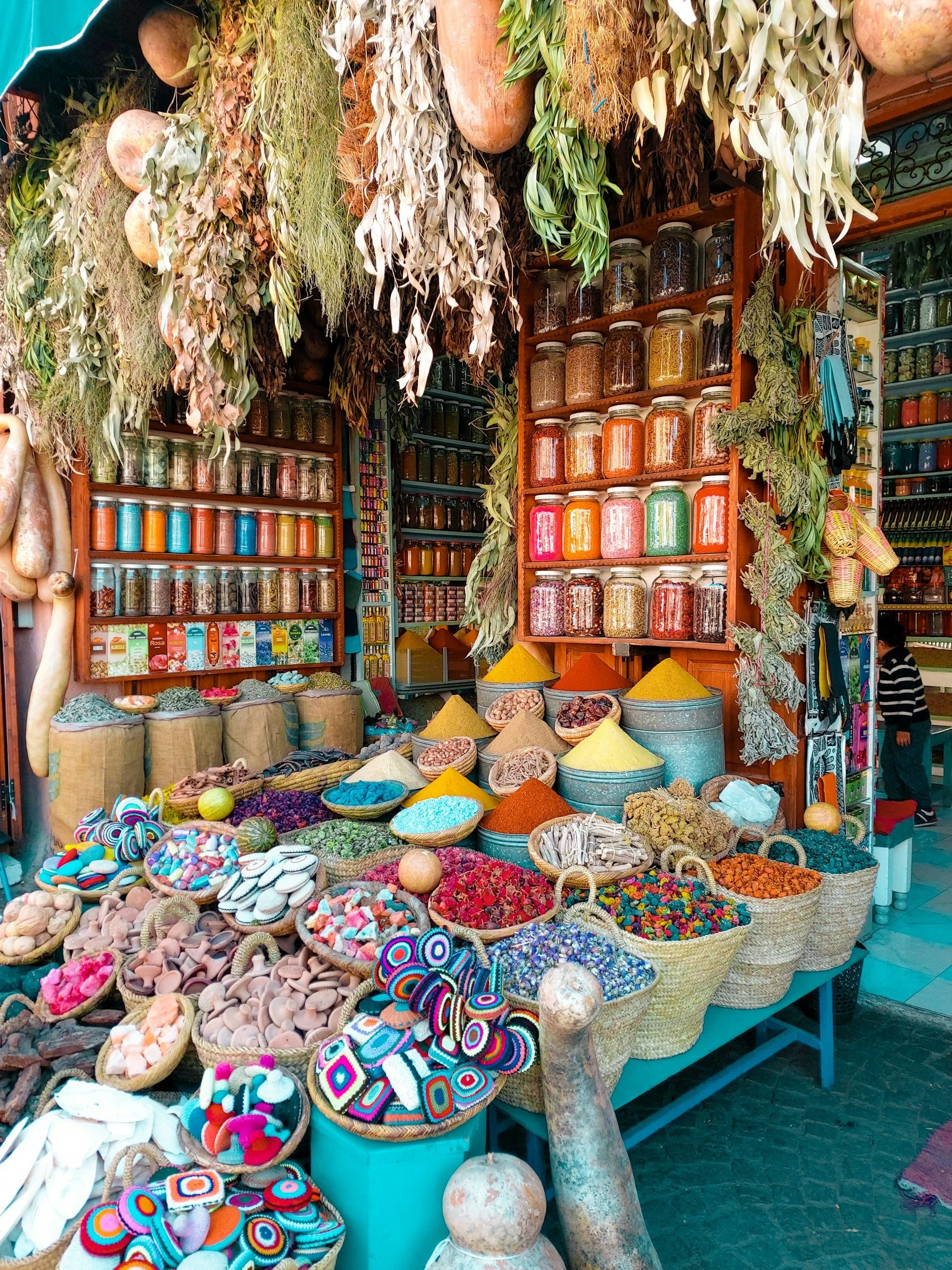
getting lost in the maze of the souks
What to See & Do in Marrakesh
Jemaa el-Fna
The beating heart of Marrakesh. By day, it’s a wide square filled with juice stalls and street performers. By night, it transforms into an outdoor theatre of food stalls, music, and storytelling. The square is unique in the world - there’s no equivalent. The smells, the hustle and the sounds. Sadly even monkeys and snakes are frequently on display - in captivity.
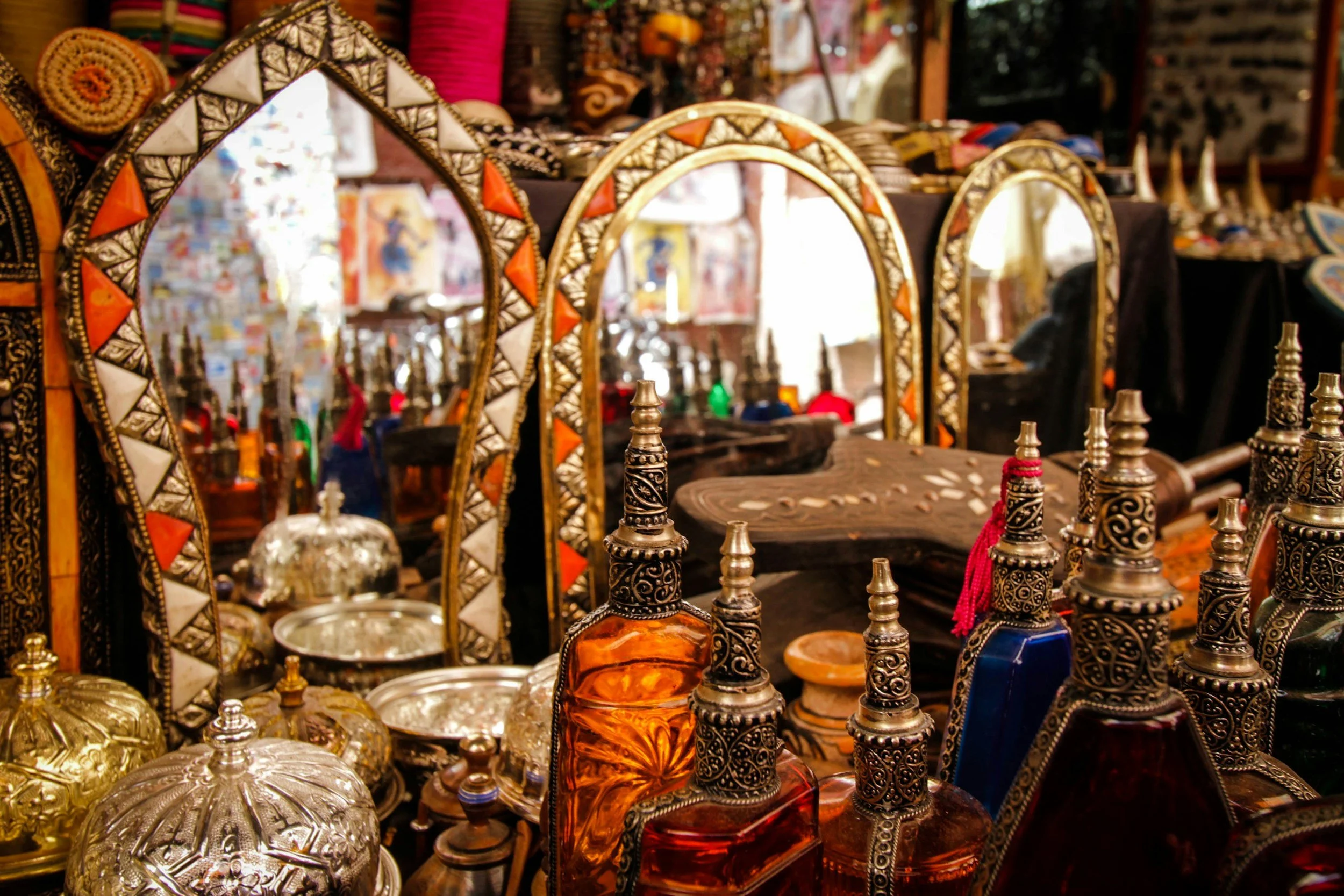
The Souks
A maze of market streets filled with:
Spices
Leatherwork
Carpets and textiles
Metal lanterns
Ceramics and pottery
Different souks specialize in different crafts—Sidi Abdelaziz (artisan district), Souk Semmarine (main artery), and Souk el Attarine (spices and perfumes).
Palaces and Historic Sites
Bahia Palace: 19th-century riad-palace with ornate carved cedar and zellij tilework.
El Badi Palace: Atmospheric ruins with sunken gardens and storks nesting atop the walls.
Saadian Tombs: Lavishly decorated royal tombs hidden for centuries behind the Kasbah mosque.
Koutoubia Mosque: Iconic minaret visible across the city (exterior only for non-Muslim visitors).
Gardens & Museums
Majorelle Garden & Yves Saint Laurent Museum: Deep blue villa, exotic botanical garden, and a fashion/design museum.
Le Jardin Secret: Restored Islamic garden inside the medina.
Musée de Marrakech and Dar Si Said (artisan and cultural collections).
Modern Marrakesh
The districts of Gueliz and Hivernage offer:
Contemporary cafes
Boutique shops
Art galleries
Rooftop lounges and nightlife
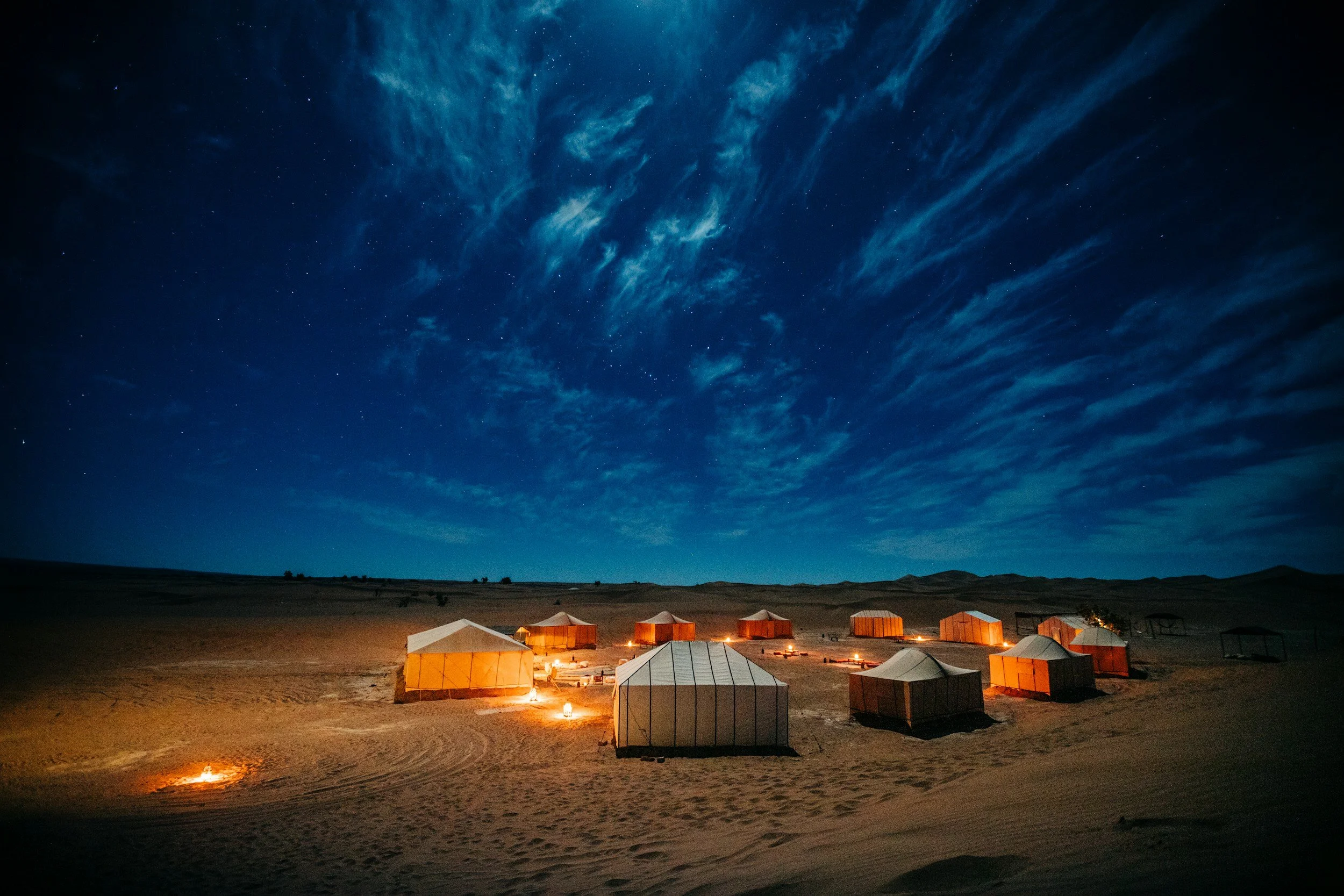
moroccan desert
Day Trips & Surrounding Areas
1. The High Atlas Mountains
The Atlas Mountains are just 45–90 minutes from Marrakesh, making them ideal for day trips or overnight stays.
Imlil & Mount Toubkal
Gateway to Mount Toubkal, North Africa’s highest peak (4,167 m).
Excellent for guided hikes, mule treks, or relaxed walking between Berber villages.
Accommodations include simple guesthouses and luxurious kasbahs overlooking the valleys.
Ourika Valley
One of the closest and easiest day trips (great trips bookable on GetyourGuide , Viator, Klook or Guruwalk)
Known for waterfalls (Setti Fatma), traditional Berber markets, and riverside cafes. Look out for local native argan oil (good for hair and skin) as well as saffron.
Great for travelers seeking gentle walks rather than mountain trekking.
Asni & Ouirgane Valley
Less touristy than Ourika.
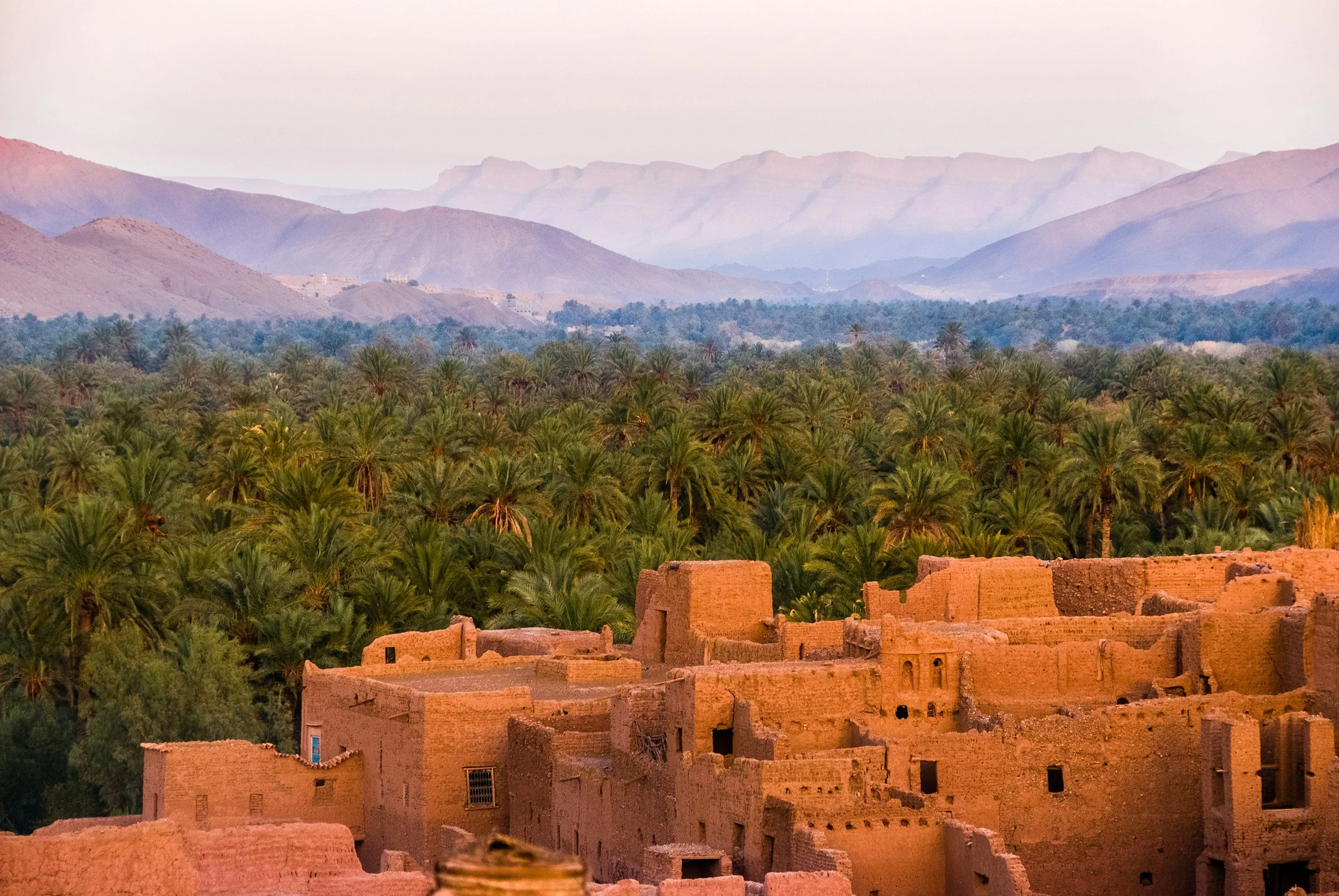
Rolling hills, terraced fields, and red-earth landscapes.
Home to luxury eco-lodges and quiet rural retreats.
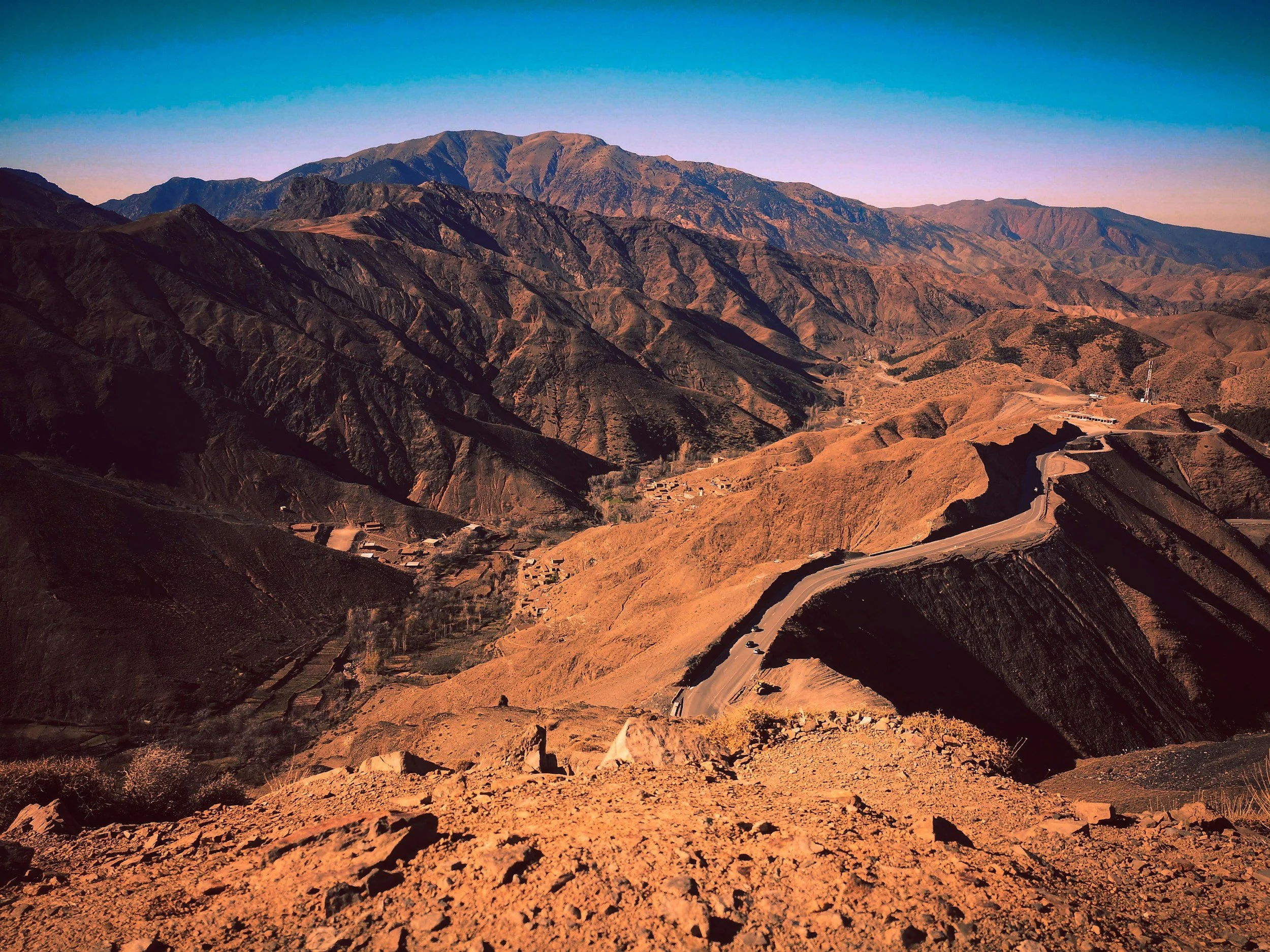
Tizi n’Tichka Pass
Panoramic drive through hairpin mountain roads.
Common route to the Sahara, Aït Ben Haddou, and Ouarzazate.
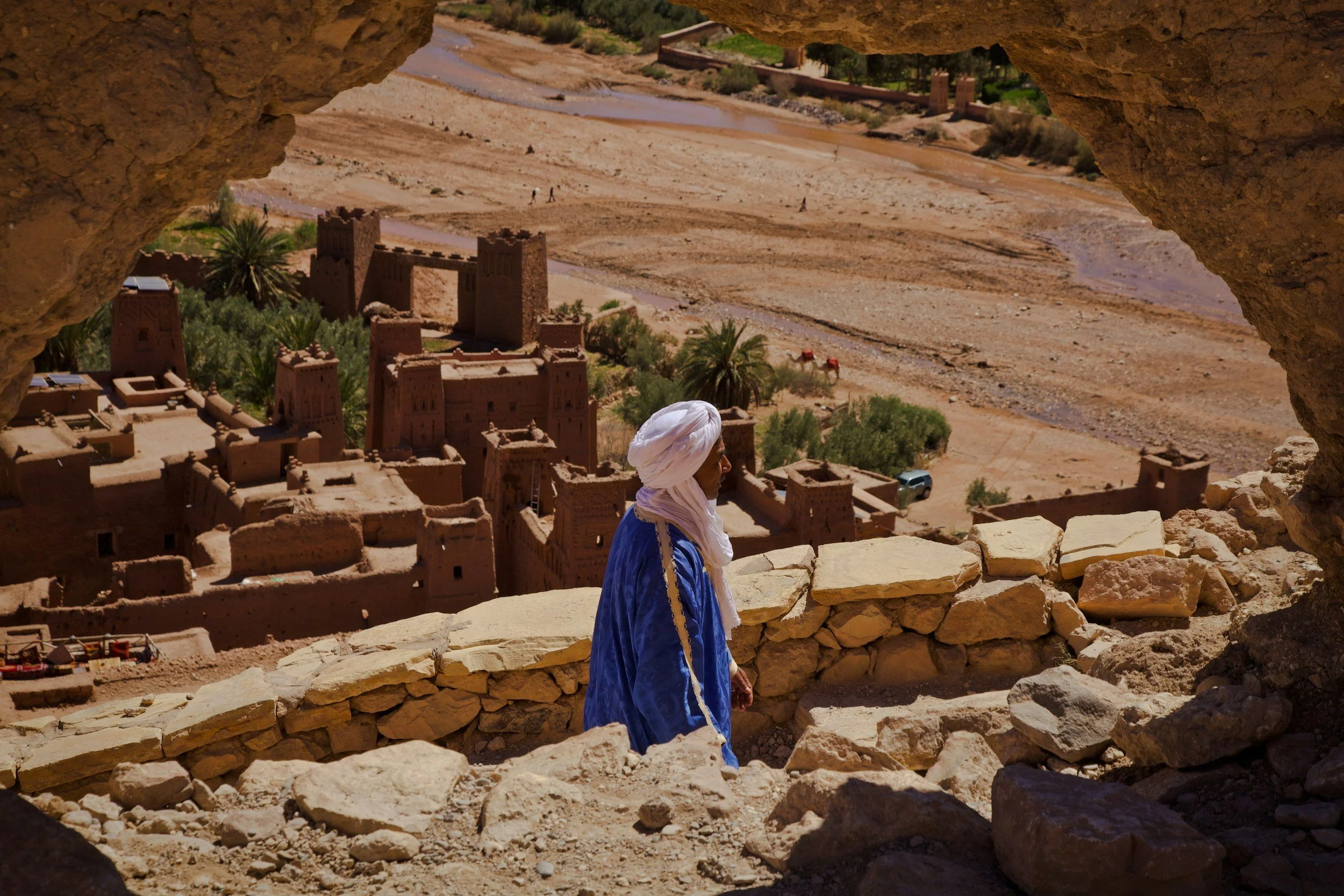
a berber village
2. The Agafay Desert
Only 40 minutes from Marrakesh.
A rocky desert (not sand dunes) offering:
Camel rides
Quad biking
Stargazing
Sunset dinners
Luxurious desert camps and swimming-pool lodges
Perfect for those who want a “desert experience” without traveling deep into the Sahara.
3. The Palmeraie (Palm Grove)
A vast palm oasis north of Marrakesh, dotted with:
Resorts and luxury hotels
Camel rides
Quad biking routes
Golf courses
Ideal for relaxation outside the medina’s bustle.
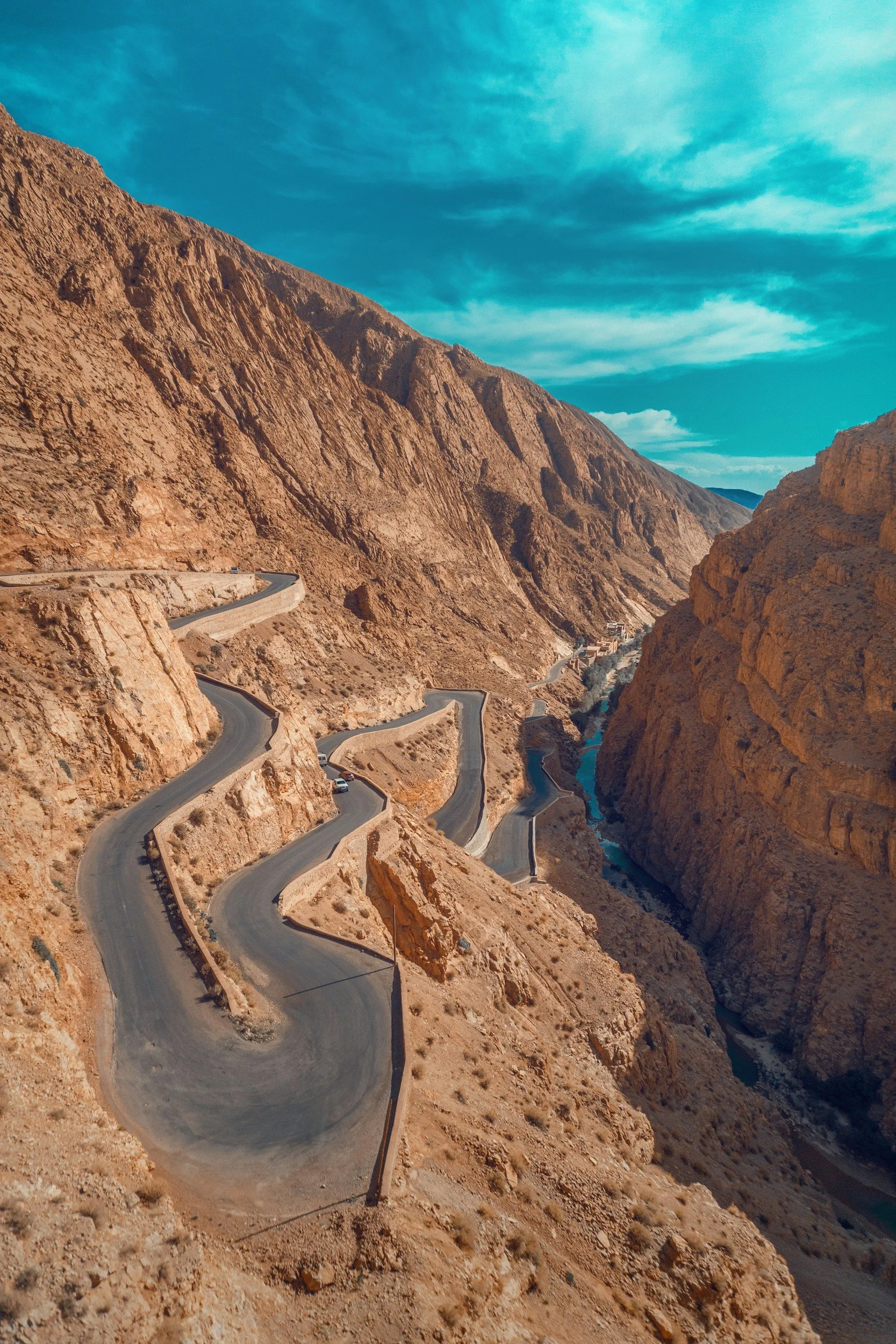
hairpin turns in the wild Atlas Mountains
How to Get to the Atlas Mountains from Marrakesh
By Grand Taxi
The most common and flexible option.
Taxis depart from major taxi stands (e.g., near Bab Doukkala or Sidi Mimoun).
Prices are negotiable; private hire is easiest.
By Private Driver
Many hotels and riads can arrange a car and driver for half-day or full-day trips. More comfortable and efficient than taxis, especially for exploring multiple villages.
By Bus
Local buses go to some towns (e.g., Asni), but they are slow and not ideal for multi-stop sightseeing.
By Car Rental
Great for independent travelers.
Roads are generally good, though mountain driving requires confidence.
By Guided Tour
Countless options exist:
Half-day Ourika Valley excursions
Full-day Atlas panoramas
Hiking tours with certified mountain guides
Overnight stays in Berber villages
Decent tours are directly bookable on GetyourGuide , Viator, Klook or Guruwalk
Best Time to Visit
Spring (March–May)
Perfect temperatures, lush valleys, snow-capped peaks.
Autumn (September–November)
Warm, pleasant weather ideal for hiking and exploring.
Winter (December–February)
Cooler in Marrakesh, cold in the mountains; great for clear skies and snow scenery.
Summer (June–August)
Very hot in Marrakesh; mountains offer a cooler escape.
Practical Tips
Dress modestly in the medina; lightweight long sleeves and trousers are common.
Cash is useful in souks and small shops; ATMs are widespread.
Negotiation/bartering is expected in most markets.
Ask before photographing people, especially in the medina.
Choose licensed guides for mountain treks.
Hydrate—dry heat can be deceptive.