Comprehensive travel guide to Ecuador and Colombia
Ecuador and Colombia, neighboring gems in northwestern South America, captivate with their dramatic contrasts—from Ecuador's volcanic highlands and "eternal spring" climates to Colombia's pulsating urban energy and lush coffee regions. Drawing from detailed travel experiences, this guide merges insights into a practical resource, highlighting cultural fusions, natural wonders, and real-world tips. Ecuador offers a more serene Andean vibe, reminiscent of Peru or northern Argentina, while Colombia's stormy development over the past two decades has created a vibrant, if chaotic, melting pot of ethnicities including indigenous peoples and descendants of African slaves. Both countries grapple with inequality, but they reward adventurers with unique flavors, histories, and landscapes. Plan for altitude adjustments in Ecuador and sensory overload in Colombia's cities.
Getting to Ecuador and Colombia
Ecuador
Access Ecuador primarily through Mariscal Sucre International Airport (UIO) in Quito or José Joaquín de Olmedo International Airport (GYE) in Guayaquil. No visa is needed for most US and European tourists for stays up to 90 days.
- From the US: Direct flights from cities like Miami, Atlanta, and Houston via American Airlines, Delta, LATAM, or United take 4–6 hours.
- From Europe: Routes from Madrid, Paris, or Amsterdam via Iberia, Air France/KLM last 10–12 hours.
- Other Options: Overland from Peru or Colombia, or cruises to the Galápagos Islands, though flights are most efficient. If transitioning from the Galápagos, expect "sea legs" to fade quickly upon arriving in Quito's high altitude.

the large but charming city of Quito surrounded by large volcanos
Enter via El Dorado International Airport (BOG) in Bogotá, José María Córdova International Airport (MDE) in Medellín, or other hubs like Cartagena. Visa-free for up to 90 days for many nationalities.
- From the US: Direct to Bogotá or Medellín from Miami, New York, or Los Angeles on Avianca, Delta, or Spirit in 3–6 hours.
- From Europe: Flights from Madrid or Paris via Iberia or Air France take 9–11 hours.
- Other Options: Border crossings from Ecuador are feasible but less common due to terrain; domestic flights connect remote areas.
Getting Around
Ecuador
Transportation is budget-friendly but requires caution, especially with belongings amid visible poverty exacerbated by the pandemic.
- Buses: The go-to for affordability—flag them down on highways like the Pan-American, as formal stops are rare outside cities. Rides can be tense when traveling alone with luggage; watch for pickpockets. Costs are low, e.g., a few dollars for hours of travel.
- Taxis/Rideshares: Use Uber or InDriver in cities for safety; short rides are $2–5.
- Domestic Flights: Essential for Galápagos or coast-to-highlands jumps via LATAM or Avianca.
- Other: Scenic drives to national parks (e.g., 2 hours from Riobamba to Chimborazo base) never bore, with views of lava fields and wildlife. Mountain bikes for descents in parks like Cotopaxi. Private drivers or tours for volcano access.
Options blend convenience with urban chaos; escape cities for tranquility in jungles or mountains.
- Buses: Cheap and frequent for intercity travel ($5–20), but long rides are exhausting. Use reputable lines.
- Taxis/Rideshares: Apps like Uber or Cabify are safest in noisy, traffic-clogged cities ($3–10).
- Domestic Flights: Quick and affordable (e.g., Medellín to Pereira in 45 minutes, $20–50 on Avianca).
- Other: Shared taxis or colectivos for rural routes; metros in Bogotá and Medellín ease city navigation. Renting cars is tricky due to traffic and poor roads in some areas.
Key Destinations and Experiences
Ecuador
Ecuador's geography shifts dramatically from coastal ports like Guayaquil (sharing trade vibes with Peru's Lima) to Andean hubs like Quito, where Inca road networks historically linked cities like Cuzco and Quito more closely than Quito and Guayaquil. The Andean culture dominates here, less so in Colombia's foothills.
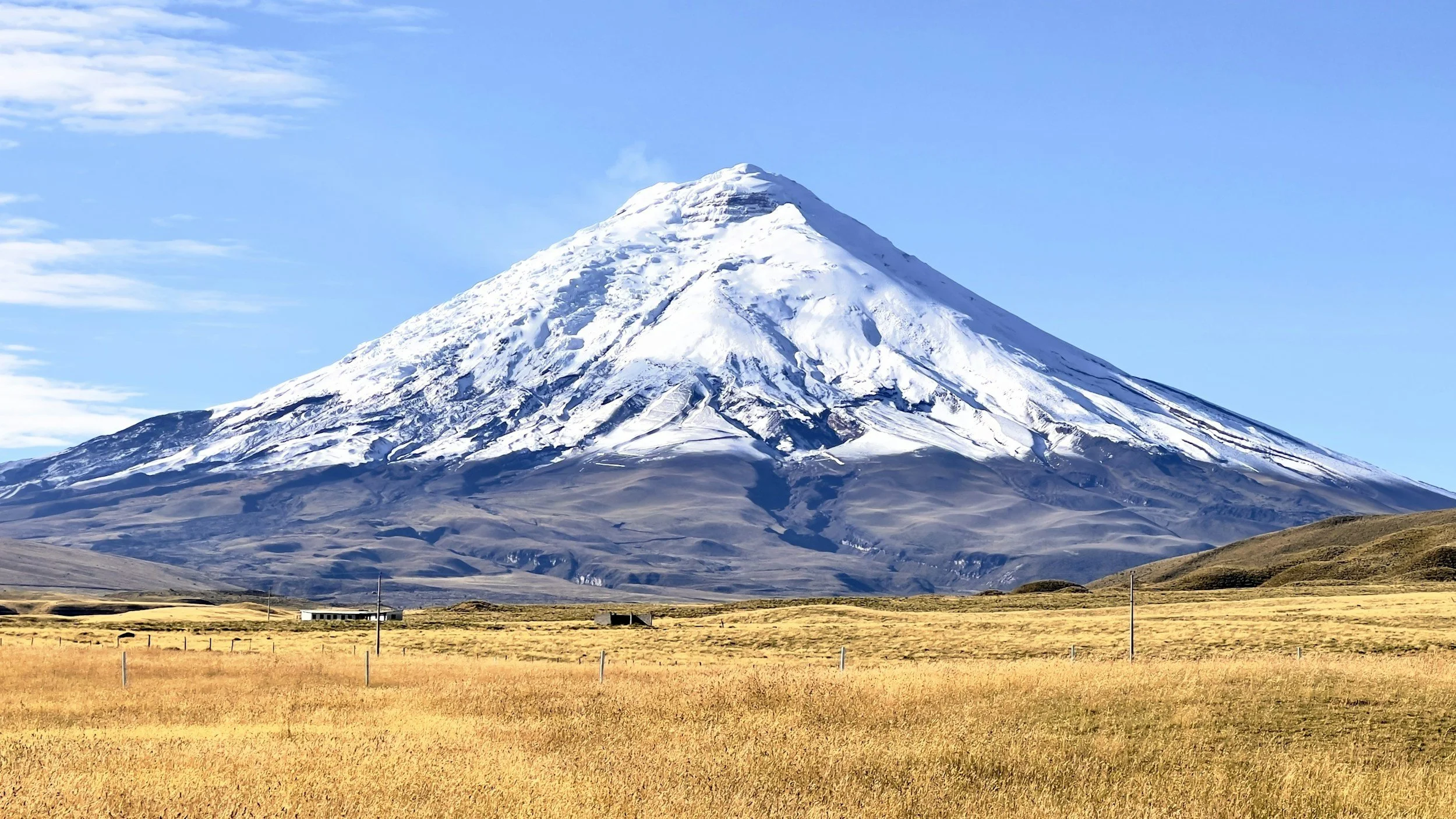
the perfect symmetrical volcano of Cotopaxi
- Quito: At nearly 3,000 meters—the highest capital globally (surpassing La Paz, Bolivia's administrative but not legal capital)—thin air, cooler temps, and surrounding mountains contrast sharply with sea-level spots. Nicknamed the "city of eternal spring" for moderate year-round weather, it's ringed by 14 partially active volcanoes, risking earthquakes and ash rains. The UNESCO-listed colonial center, the world's first heritage site and South America's second-largest after Havana, blends Spanish (Andalusian influences), Moorish, and indigenous styles in buildings and churches. Walking tours with small groups reveal central squares bustling with markets; sample fresh fruits and Ecuador's premier coastal cocoa—less bitter than Amazonian or African varieties, making 95–100% chocolate mild and delicious with add-ins like chili, sea salt, cacao nibs, or coffee. Hotels can be hidden gems: colonial oases with terraces and stylish breakfast rooms opposite gritty streets, often greeting guests with a "welcome home" for that personal touch (though partly a review-boosting ploy).
- Chimborazo Volcano: Near Riobamba, this extinct behemoth evokes awe with its snowy summit, vast lava fields, and roaming vicuñas. Once thought the world's highest by Europeans like Von Humboldt, it's actually the farthest from Earth's core due to the planet's equatorial bulge—3 km closer to the sun than Everest. Climbs start at 5,000 meters after a scenic 2-hour drive from Riobamba. Hire rare English-speaking guides (freelancers with variable reputations—competent but sometimes blunt or customer-indifferent) for technical ascents involving ropes, harnesses, crampons, and ice axes. Pay upfront for day-night attempts; acclimatize by sleeping lower than your day's peak to avoid nausea, headaches, and failed summits. Experiences vary: energetic starts can turn to altitude sickness, forcing turnarounds amid pitch-black nights with distant town lights and climber headlamps. Only a fraction (e.g., 6 of 30) reach the top for dawn views, followed by adrenaline-fueled 4-hour descents. Prep with proper gear—discarded jackets and shoes from locals help; athleticism alone (like climbing Ben Nevis) isn't enough.
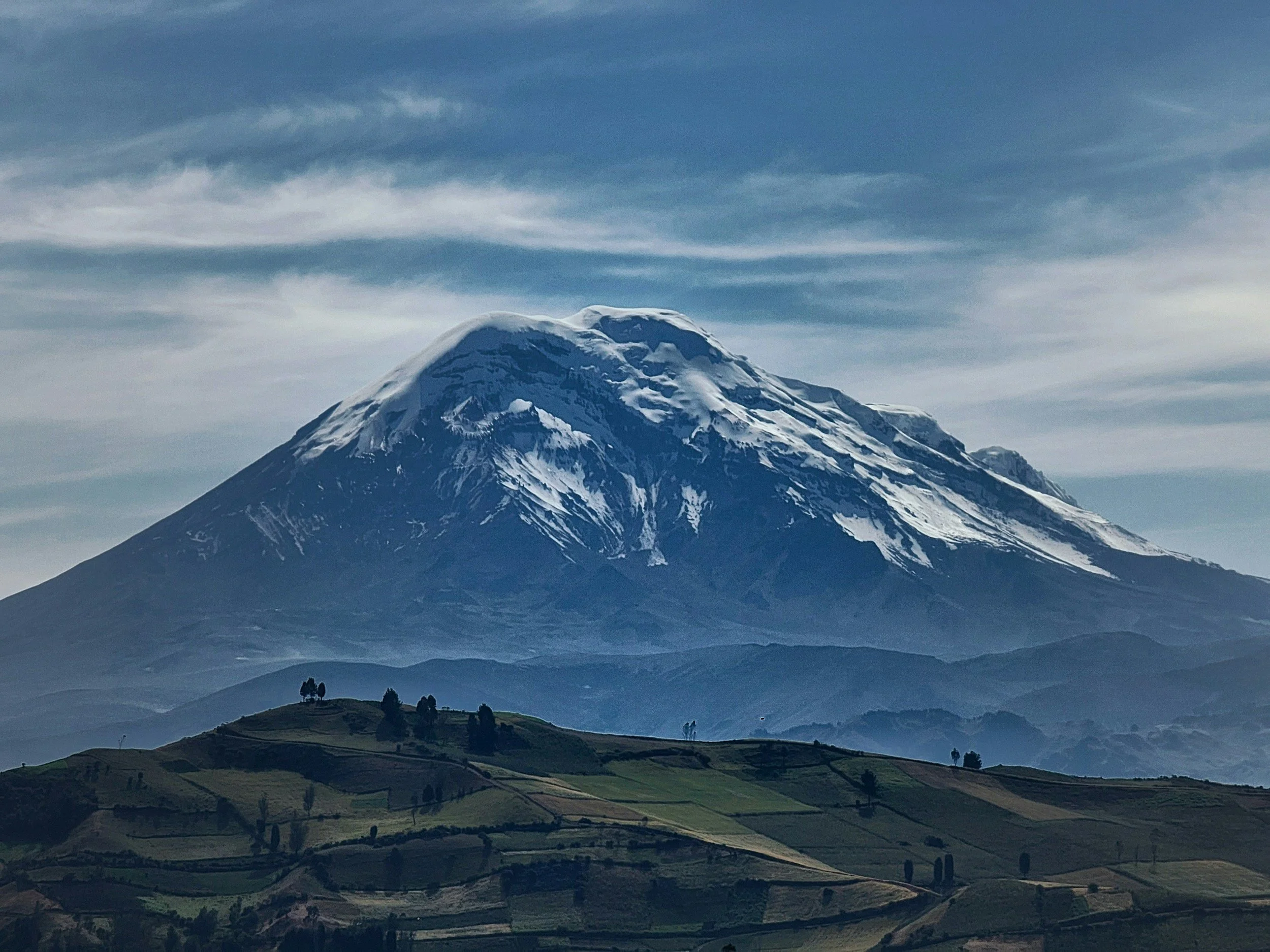
the mighty Chimborazo, getting up is not a walk in the park
- Cotopaxi Volcano: Chimborazo's active "smaller brother," famed for its perfect symmetry and frequent eruptions (recent smoke and ash). Summit climbs are often banned; instead, explore the moon-like national park with stone dust, boulders, and layered eruption "growth rings" revealing volcanic history. Volcanoes act as Earth's heat valves, aiding recovery from ice ages by releasing magma. Hike to receding glaciers or bike downhill to lodgings; the surrounding fields highlight life's dependence on these "dancing" peaks.
- Other Highlights: Bus travel exposes inequality—half the population on a few dollars daily, with closed doors barring beggars. Yet, exports like oil, cocoa, fruits, and flowers make Ecuador relatively prosperous in Latin America.
Colombia
Colombia isn't for unwinding unless venturing to jungles or mountains; cities like Bogotá and Medellín drain energy like a "wrung towel" with their cacophony of traffic, music, and noise penetrating thin walls from dawn to night. Yet, they energize with fresh perspectives amid dirty streets and excess nature elsewhere. The country, 27 times the Netherlands' size, is hard to govern centrally, with ongoing tensions from FARC splinters, paramilitaries, and gangs despite the 2016 truce boosting tourism. Stereotypes of drugs and violence offend most well-meaning Colombians; travel advisories warn of risks, but many Europeans visit undeterred (fewer Americans). Robberies are common—carry minimal cash, leave phones/cards in hotels.
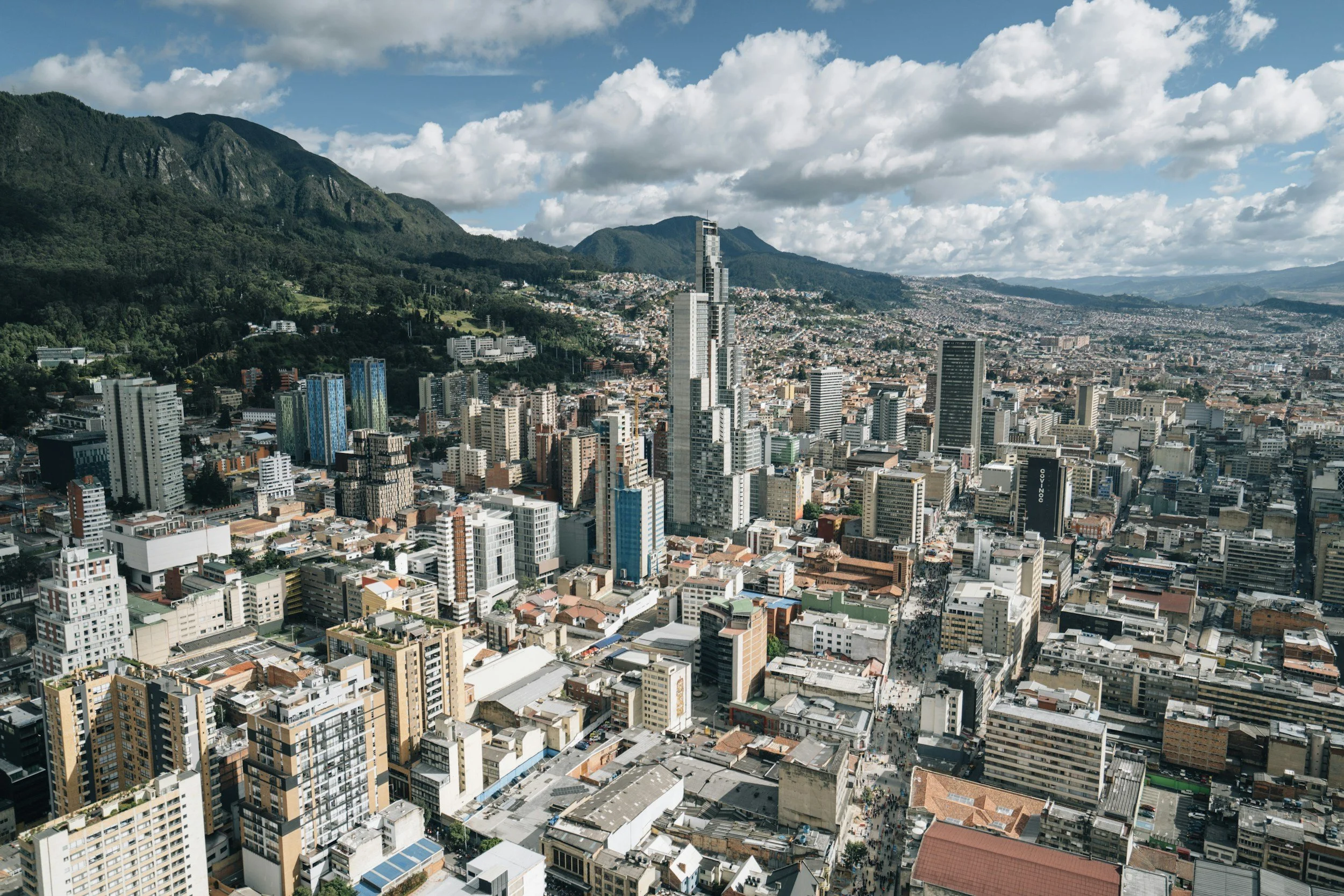
the very big capital Bogota sits at almost 2.000 altitude
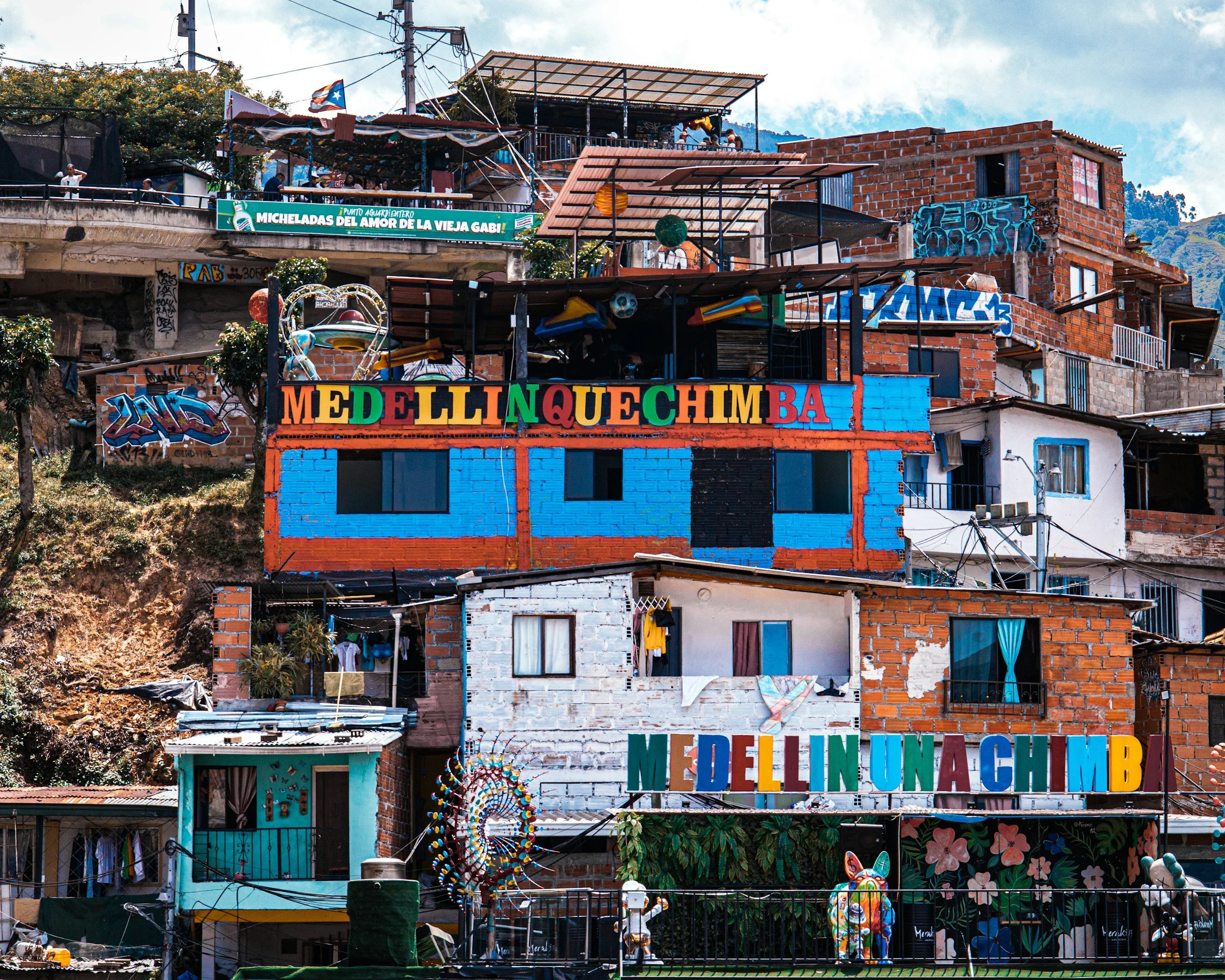
- Bogotá and Medellín: A fusion of sounds, smells, and tastes overwhelms, with pumping music from cabs, kitchens, and cafes amid thundering traffic. Hotels, despite noise bombardment, rate well mysteriously. Poverty is stark: homeless "glue sniffers and crackheads" rummage trash for scraps, while elites bunker in secure towers and SUVs. Development skipped phases, prioritizing prosperity over greenery or quiet for lower/middle classes. Medellín, a former sleepy town, boomed with coffee (thriving in the valley, harvestable twice yearly) and notoriously cocaine. Pablo Escobar's cartel controlled 40% of global supply in the 1980s–90s; production persists in remote Colombia, Peru, Bolivia areas, hard to control despite US aid. Geographically ideal with Pacific/Caribbean access, early transport used low-flying planes; now, submarines to Mexico. Cash laundering via cabs and soccer clubs was tolerated until Escobar's parliament bid sparked violence ("silver or lead"). "Narcos"-inspired tours draw crowds, but lows include tourists disrespecting his grave. The 1994 World Cup aimed for "sportwashing" with stars like Valderrama, Higuita, and Asprilla, but threats from gambling mafias and drug lords led to tragedy: Andrés Escobar's own-goal and subsequent murder in a Medellín parking lot reset the image.
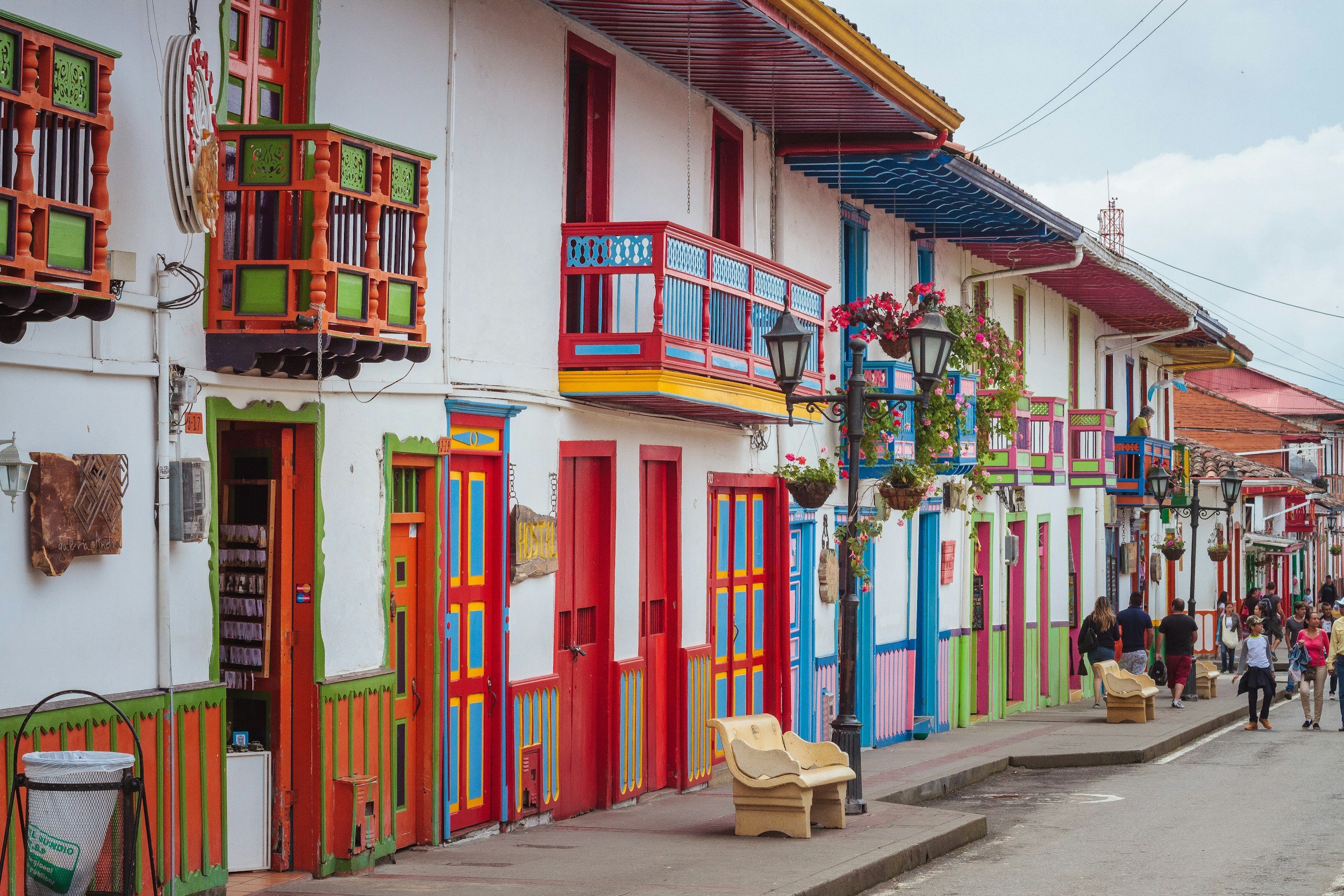
- Coffee Region (Salento and Pereira): The heart of coffee culture; fly 45 minutes from Medellín to Pereira, then cab to Salento—a colonial town of 5,000 at 1,900 meters, tourist-flooded but affordable (€10 meals, €40–50 rooms; cheaper off-tourist paths, though hot water isn't guaranteed). Plantations demo processes: pick berries (day laborers earn 25 euro cents/kg, stark vs. European espresso prices), noting natural "tones" from interplanted cocoa, citrus, even cannabis—no large monocultures, often pesticide-free despite pests, preserving soil and taste. Fruits abound, fresh for a week max, unknown in Europe: granadilla (passion fruit-like favorite), tomato-plum crosses. Hotel breakfasts, though sparse, feature these with hummingbirds flitting by terraces. Nearby Cocora Valley (on banknotes) offers wax palms; hike 5,000+ meter volcanoes or natural areas.
- Other Highlights: Simon Bolívar's legacy—freeing Venezuela, Colombia, Ecuador, Peru, Bolivia from Spain, inspired by Napoleon's 1805 Milan coronation—renames many plazas. Ethnic diversity shines near Cartagena with slave descendants.
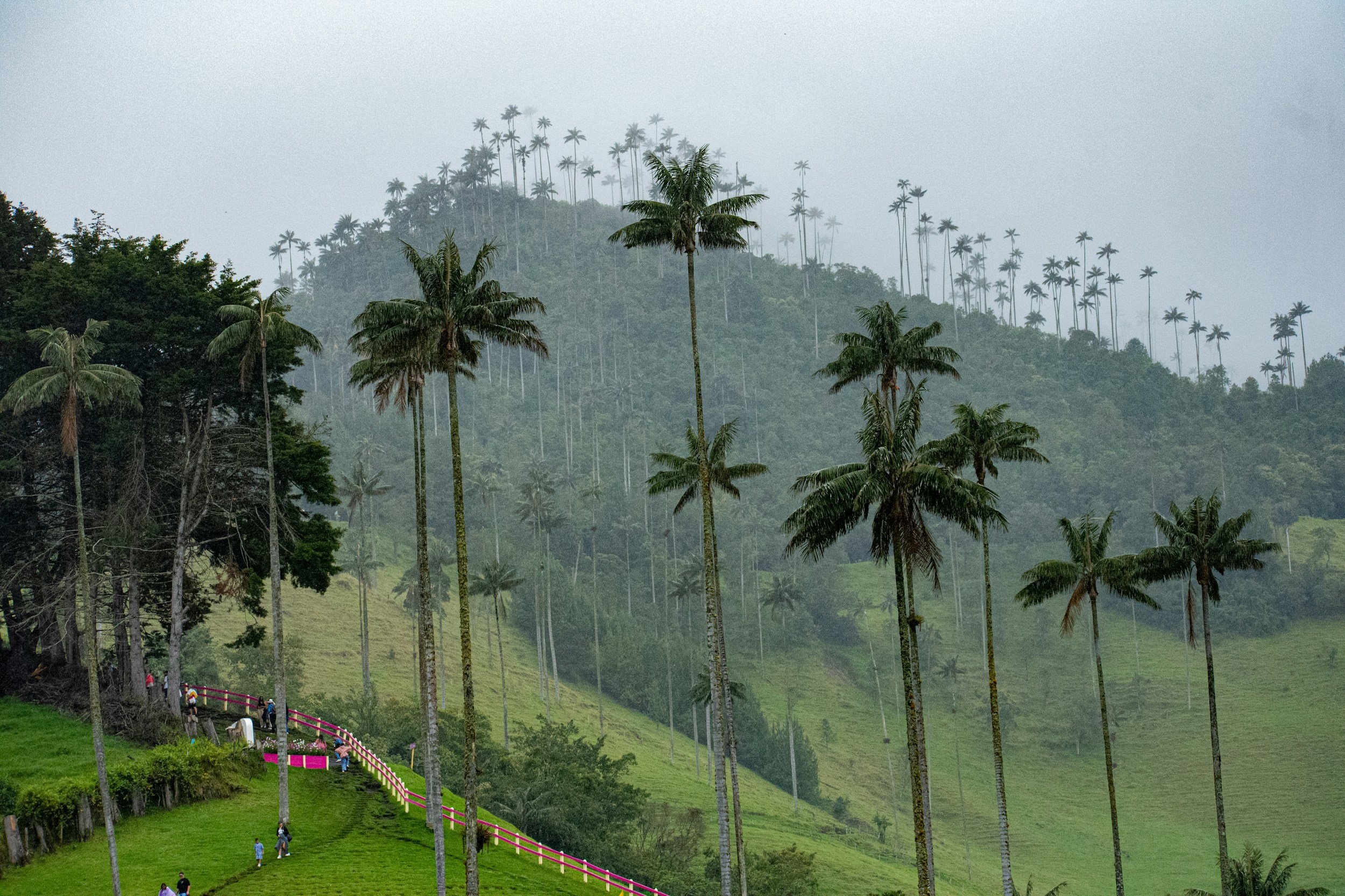
cocora valley nearby Salento
Culture, Cuisine, and Practical Tips
- Culture: Ecuador's Inca-linked Andean core (roads from Argentina to Quito) fuses with colonial elements; Colombia's mix includes original inhabitants and African influences, making it a true melting pot.
- Cuisine: Ecuador's mild chocolate and fruits delight; Colombia's exotic fruits and chemical-free coffee stand out—try granadilla at breakfast.
- Safety and Tips: Inequality drives pickpocketing (explainable, not justifiable); pandemic hits linger with closed businesses and beggars. Acclimatize gradually—sleep low after high climbs. Spanish or Google Translate essential off-path; assume good hotel reviews despite noise. Budget: Both affordable, Ecuador slightly more so. Best time: Dry seasons (June–September) for outdoors.